
Let's dive in.
Hip pain can make everyday activities feel surprisingly difficult and can actually be caused by a range of things including muscles, tendons, the lower back, pelvis, and surrounding tissues.
Osteopathy offers a hands-on, whole-body approach to understanding and treating hip pain. Rather than focusing only on the painful area, we look at how the hip is moving, how the pelvis and spine are functioning, and whether other parts of the body may be placing extra strain on the hip.
Causes of hip pain
Hip pain can develop for many different reasons including:
-
Muscle or tendon strain
-
Overuse from running, walking, sport, or gym training
-
Reduced mobility in the hip joint
-
Gluteal tendinopathy or bursitis
-
Arthritis or age-related joint changes
-
Stiffness in the lower back or pelvis that alters the way you move
-
Recovery after a fall, injury, or period of inactivity
Firstly it is essential to seek medical assessment if:
-
Hip pain follows a significant fall or trauma.
-
You cannot bear weight on the leg.
-
The hip becomes hot, red, or swollen.
-
You have fever, unexplained weight loss, or severe night pain.
-
There is new numbness, weakness, or loss of bladder/bowel control.
How osteopathy approaches hip pain
At the first appointment, our Osteopaths will ask a range of questions to establish; where the pain is felt (groin, side of the hip, buttock, or thigh); what makes it better or worse; when it started and whether there was an injury; your activity levels, work, sport, and daily habits; any previous back, pelvic, or hip problems
Following this our Osteopaths will carry out a physical assessment to assess: hip range of motion; strength of the gluteal and hip muscles; walking and balance; movement of the pelvis and lower back; areas of muscle tension, tenderness, or stiffness
This broader assessment is useful because hip pain is often influenced by how the whole lower body moves together. A stiff lower back, an asymmetrical gait, or weak hip stabilisers can all increase load on the hip.
What Osteopathy treatment may involve
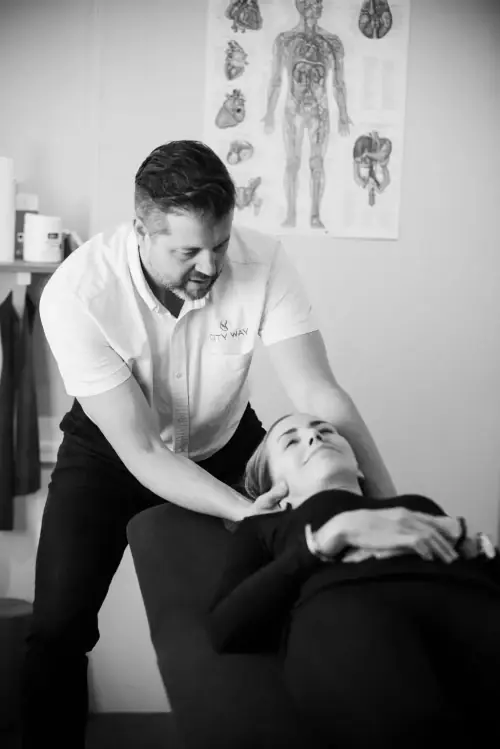
Our Osteopathic treatment is tailored to the individual and may include:
- Gentle joint mobilisation : To help improve movement in the hip, pelvis, and lower back.
- Soft-tissue techniques : Hands-on work for tight or overworked muscles such as the gluteals, hip flexors, and surrounding tissues
- Stretching and mobility work : To restore comfortable movement and reduce stiffness
- Exercise and rehabilitation advice : Simple strengthening and control exercises to improve hip stability and function
- Posture, gait, and activity advice : Practical changes for sitting, sleeping, walking, training, or returning to exercise.
During any appointment, treatment will be explained clearly and kept within your comfort level. You can always ask what is being done and why.
What does the Osteopathic evidence suggest?
For many people with mechanical hip pain - pain related to movement, loading, stiffness, or surrounding soft tissues - hands-on treatment combined with targeted exercises can help reduce pain and improve function. The strongest long-term results generally come from active rehabilitation, such as strengthening, mobility, and gradual return to activity, rather than passive treatment alone.
Osteopathy can be a useful part of that plan by helping you move more comfortably, identifying contributing factors, and guiding appropriate exercises and activity changes.
Self-care between appointments
As well as treatment, we always recommend patients carry out a few simple habits that can support recovery:
-
Keep moving gently such as short walks
-
Avoid repeatedly pushing into sharp pain
-
Change position regularly if you sit for long periods
-
Sleep with a pillow between the knees if side-lying is uncomfortable.
-
Follow the exercises prescribed by our Osteopaths consistently
The bottom line
Hip pain is often influenced by more than the hip joint alone. Osteopathy aims to assess the hip in the context of the pelvis, lower back, muscles, and movement patterns that may be contributing to the problem.
A typical plan may combine hands-on treatment, mobility work, strengthening exercises, and practical advice about daily activities.
To find out more about Osteopathy or book an appointment please just click here